Supporting women with serious mental illness: Building health, autonomy, and meaningful lives
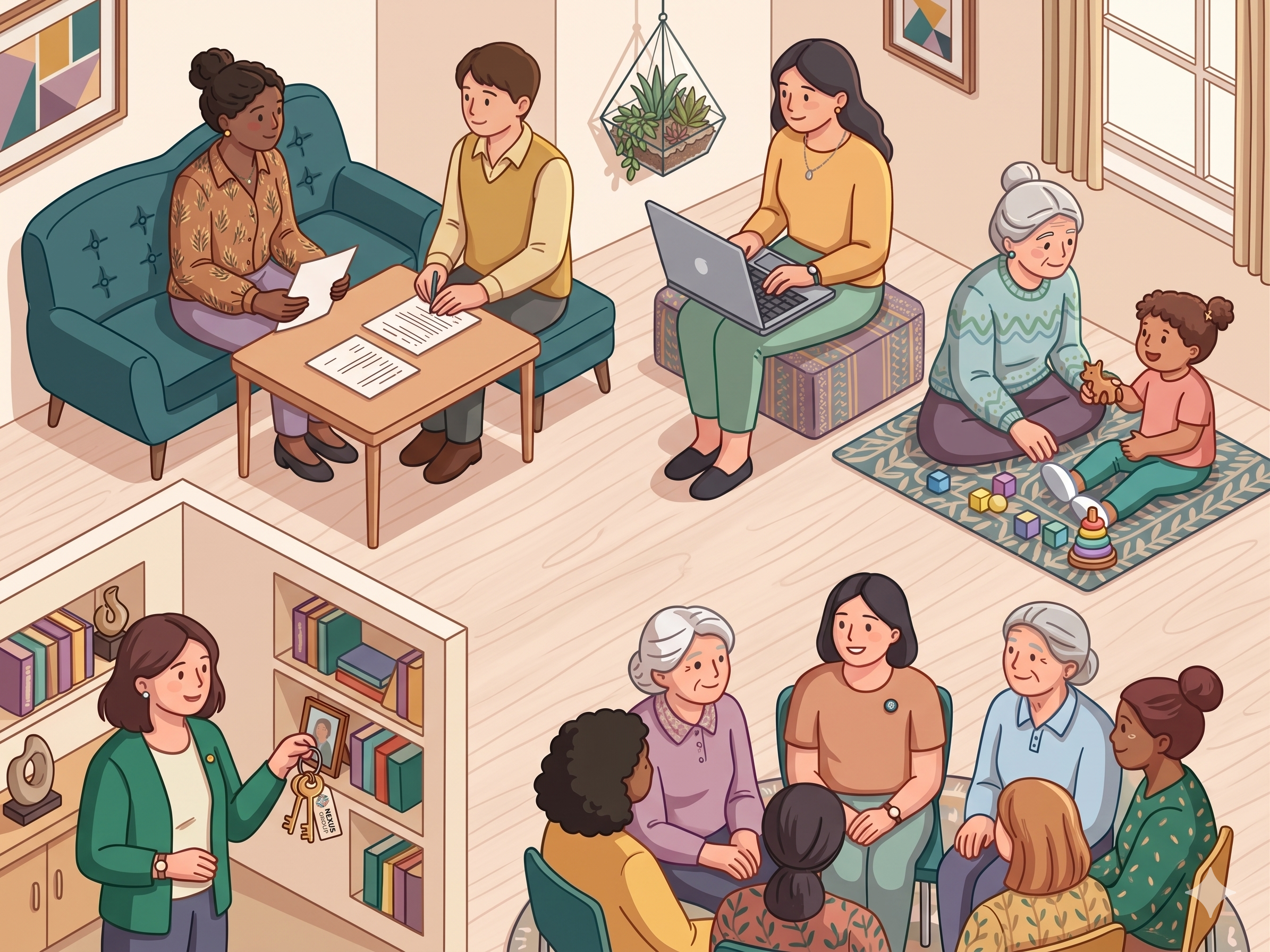
Women living with serious mental illness (SMI) often face not only psychiatric symptoms but also trauma, stigma, poverty, and structural barriers that shape recovery. Effective care therefore needs to address functioning, goals, safety, and social context, not only diagnosis and symptom control.
SMI refers to mental, behavioural, or emotional conditions that produce serious functional impairment in daily life. In women, these conditions often occur alongside caregiving demands, violence exposure, housing instability, and unequal access to services, which can make recovery more complicated and prolonged.
Recovery-Oriented Care
A recovery-oriented approach treats women as active partners in their own care rather than passive recipients of services. This model emphasises hope, self-direction, strengths, peer support, and community participation, and it recognises that recovery is often uneven rather than linear.
This perspective matters because women with SMI often define success in practical terms: stable housing, meaningful relationships, safer parenting, employment, or independence. When treatment begins with those goals, engagement is usually stronger, and clinical interventions may feel more relevant and less coercive.
Recovery-oriented care also shifts attention away from diagnosis as the central organising concept. Instead of asking only how to reduce symptoms, clinicians also ask how to improve daily functioning, autonomy, and quality of life. That focus is especially useful when symptoms are chronic or fluctuating, because it allows progress to be measured in real-world terms.
Trauma and Gender
Trauma-informed care is essential for women with SMI because many have histories of childhood adversity, intimate partner violence, or repeated victimisation. Research has shown that trauma exposure is highly relevant in psychiatric populations and can affect both symptom severity and functional outcomes (Aakre et al., 2014).
A gender-aware perspective adds another important layer. It recognises that sexism, coercion, and unequal power relations can influence both the development of mental health problems and the way women are treated in health systems. This means clinicians should be careful not to interpret understandable responses to oppression as simply individual pathology.
Trauma-informed care also requires attention to safety, collaboration, choice, and trust. For many women, especially those with repeated experiences of control or violence, a respectful and transparent therapeutic relationship may be as important as the intervention itself.
Intersectional Care
Women with SMI are not a uniform group, and their experiences are shaped by race, ethnicity, sexuality, class, disability, age, and immigration status. An intersectional framework helps clinicians see how these identities combine to affect access to care, quality of treatment, and recovery opportunities (American Psychological Association [APA], 2017a, 2017b).
This matters because the barriers faced by a woman with stable income and family support are very different from those faced by a woman who is poor, transgender, racially marginalised, or living in unsafe housing. Culturally responsive care is therefore not an optional add-on; it is part of effective clinical practice and a way to improve engagement and trust (APA, 2017a; Kirmayer, 2007).
Recent qualitative research also shows that women from minoritised ethnic communities value flexibility, person-centred care, and therapist awareness of cultural context. Those features can make treatment feel more relevant and less alienating, especially when systems have historically excluded or misunderstood them (Arundell et al., 2024).
Effective Interventions
A number of interventions fit well with recovery-oriented care for women with SMI. Cognitive behavioural therapy for psychosis can help reduce distress, improve coping, and support functioning, especially when it is delivered collaboratively and adapted to the person’s goals. Dialectical behaviour therapy can also be useful for emotion dysregulation, self-harm, suicidality, and some personality disorders.
Trauma-focused therapies are essential when trauma is a major part of the clinical picture. In addition, community-based supports such as supported housing, supported employment, peer services, and coordinated rehabilitation can improve real-life outcomes and reduce the isolation that often worsens symptoms (Wykes et al., 2011).
Psychiatric advance directives can further strengthen autonomy by allowing women to state in advance what kinds of care they want during crises. This can reduce fear, increase trust, and help clinicians honour the person’s preferences when decision-making becomes difficult.
Cognitive Enhancement
Cognitive difficulties are a major but sometimes overlooked part of SMI. Problems with attention, memory, processing speed, and executive function can interfere with work, parenting, treatment adherence, and everyday decision-making even when acute symptoms have improved (McGurk et al., 2015; Wykes et al., 2011).
Cognitive enhancement interventions, especially cognitive remediation, have a strong evidence base in psychiatric rehabilitation. Meta-analytic evidence shows that cognitive remediation improves cognition in schizophrenia, and benefits are greatest when the intervention is paired with other supports that help people apply skills in daily life (Lejeune et al., 2021; Wykes et al., 2011). A randomised trial also showed that cognitive enhancement treatment can improve vocational outcomes for people with mental illness who do not respond well to supported employment alone (McGurk et al., 2015).
These interventions are especially relevant for women with SMI because cognitive difficulties can directly interfere with goals they care about, such as returning to work, managing childcare, maintaining routines, or organising appointments. When cognitive remediation is connected to real-life goals and broader rehabilitation, it is more likely to produce meaningful change than when it is used in isolation (McGurk et al., 2015; Lejeune et al., 2021).
System-Level Change
Improving outcomes for women with SMI requires changes not just in therapy, but in systems of care. Services need to reduce coercion, increase access, and respond to social determinants such as housing, employment, violence exposure, and poverty.
This also means that clinicians may need to work beyond traditional therapy roles. Case management, interdisciplinary collaboration, advocacy, and coordination with community services can be essential parts of effective care. In practice, the best outcomes often come from combining psychological treatment with rehabilitation and social support rather than relying on one intervention alone (Wykes et al., 2011).
At a broader level, reducing stigma and improving culturally responsive service design are necessary for long-term progress. Women with SMI do better when systems treat them as people with rights, strengths, and preferences rather than as problems to be managed (APA, 2017a).
References
Aakre, J. M., Brown, C. H., Benson, K. M., Drapalski, A. L., & Gearon, J. S. (2014). Trauma exposure and PTSD in women with schizophrenia and coexisting substance use disorders: Comparisons to women with severe depression and substance use disorders. Psychiatry Research, 220(3), 840-845.
American Psychological Association. (2017a). Multicultural guidelines: An ecological approach to context, identity, and intersectionality.
American Psychological Association. (2017b). Guidelines for providers of psychological services to ethnic, linguistic, and culturally diverse populations.
American Psychological Association. (2024, March 31). How to help women with serious mental illness lead healthier, more rewarding lives. Monitor on Psychology.
Arundell, L.-L., Saunders, R., Barnett, P., Leibowitz, J., Buckman, J. E. J., & Pilling, S. (2024). Exploring perspectives on how to improve psychological treatment for women from minoritised ethnic communities: A qualitative study with service users. International Journal of Social Psychiatry, 70(8), 1481-1494.
Kirmayer, L. J. (2007). Psychotherapy and the cultural concept of the person. Transcultural Psychiatry, 44(2), 232-257.
Lejeune, J. A., Northrop, A., & Kurtz, M. M. (2021). A meta-analysis of cognitive remediation for schizophrenia: Efficacy and the role of participant and treatment factors. Schizophrenia Bulletin, 47(4), 997-1006.
McGurk, S. R., Mueser, K. T., Xie, H., Welsh, J., Kaiser, S., Drake, R. E., Becker, D. R., Bailey, E., Fraser, G., Wolfe, R., & McHugo, G. J. (2015). Cognitive enhancement treatment for people with mental illness who do not respond to supported employment: A randomized controlled trial. American Journal of Psychiatry, 172(9), 852-861.
Wykes, T., Huddy, V., Cellard, C., McGurk, S. R., & Czobor, P. (2011). A meta-analysis of cognitive remediation for schizophrenia: Methodology and effect sizes. American Journal of Psychiatry, 168(5), 472-485.